
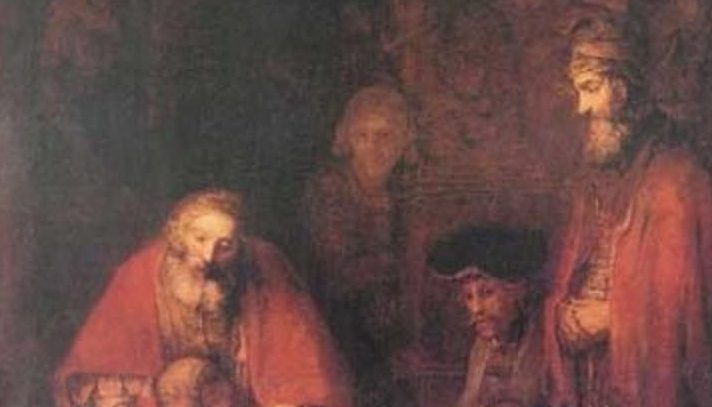
The Parable of the Prodigal Son is a parable of grace. It is the definitive parable of grace. It is about the God who bestows favor on the unworthy and undeserving. This famous parable is often misunderstood because we focus too much on the prodigal son. The star is the loving father, not the prodigal son. The prodigal highlights and spotlights the grace of God. In that regard, the elder brother is just as important as the prodigal son – maybe more.
Luke 15:1-2 is the occasion of the parable: “Now the tax collectors and sinners were all drawing near to hear him. And the Pharisees and the scribes grumbled, saying, ‘This man receives sinners and eats with them.” Scribes and Pharisees were deemed righteous because they did not associate with tax collectors and sinners. Jesus receiving sinners and eating with them made it clear to the religious leaders which side he was on. Jesus will show that they are wrong about him and God. He responded with three parables.
- Verses 4-7 record the parable of the lost sheep.
- Verses 8-10 record the parable of the lost silver.
- Verses 11-32 record the parable of the lost son.
Lost people matter to God. This is the point of all three parables. This third story says more and says it better. The parables share a general outline: Lost. Found. Celebrate. In the first two parables, the joyful celebration is the climactic end. In this third parable, the celebration of the prodigal’s return is interrupted when the father discovers the elder brother is missing. The parable ends without us knowing if the elder brother joined the celebration or not. Jesus leaves us hanging because the parable is not about the elder brother. It is about the scribes and Pharisees who grumbled against Jesus. It is about all those who are guilty of what Philip Yancey called “ungrace” – the opposite of grace. The father’s conversation with the elder brother is God’s message to every Christian and church: Don’t miss the party!
Do not Let Anger Cause You to Miss the Party.
The father is the protagonist of the parable. After the parable begins, the spotlight focuses on the prodigal son. Yet the father remains the star of the story. The father welcoming the prodigal home is the high point. The high point is not the main point. The point is the elder brother’s angry response to the father welcoming the prodigal home.
The Elder Brother Was Angry. Verses 25-28 say: “Now his older son was in the field, and as he came and drew near to the house, he heard music and dancing. And he called one of the servants and asked what these things meant. And he said to him, ‘Your brother has come, and your father has killed the fattened calf, because he has received him back safe and sound.’ But he was angry and refused to go in.”
As the elder brother returned from the field, he heard professional musicians and saw choreographed dancing in the distance. This was no impromptu get-together. It was a lavish banquet. He asked about the occasion. A servant told him his brother had come home from the far country. And the father killed the fattened calf to celebrate the prodigal’s safe return. The elder brother should have said, “Why did no one tell me my brother was home?” Instead, he was angry and refused to go in. The elder brother was not angry with the prodigal for coming home. He was angry with the father for receiving and restoring his wayward son. It did not matter that his brother was “safe and sound.” The prodigal’s actions put him in danger and at risk. The father overlooked the prodigal’s transgressions. This angered the elder brother, and he refused to join the party. This is as dishonorable as the prodigal demanding his inheritance. It was the elder brother’s duty to co-host this party. Yet he angrily refused to go in.
The Father was not Angry. When the father heard the elder brother refused to join the party, he did not say, “He can stay out there! Let’s keep partying.” He could have ordered the elder brother to come in immediately. Verse 28 says, “His father came out and entreated him.” The father’s initiative to seek out the elder brother is the link to the previous parables. The shepherd searches for the lost sheep until he finds it. The woman searches the house until she finds the coin she lost. When the prodigal son went to the far country, the father did not search for him. He patiently awaited the prodigal’s return. When the elder brother refused to join the celebration, the father went out and pleaded with him to join the party. The elder brother was just as lost as the prodigal son. He was not in the far country. Yet he was separated from his father and needed to be restored. The fact that you have never traveled to a far country does not mean things are right between you and the father.
- You can be home but estranged.
- You can be moral but unredeemed.
- You can be religious but lost.
- You can be in church but unsaved.
- You can be an inside-outsider.
Matthew 7:21-23 says, “Not everyone who says to me, ‘Lord, Lord,’ will enter the kingdom of heaven, but the one who does the will of my Father who is in heaven. On that day many will say to me, ‘Lord, Lord, did we not prophesy in your name, and cast out demons in your name, and do many mighty works in your name?’ And then will I declare to them, ‘I never knew you; depart from me, you workers of lawlessness.’”
Do not Let Pride Cause You to Miss the Party.
Verse 28-29 says, “His father came out and entreated him, but he answered his father, “Look, these many years I have served you, and I never disobeyed your command, yet you never gave me a young goat, that I might celebrate with my friends.” The elder brother did not get caught up with prostitutes in the far country, like the prodigal. He was in an illicit affair with I, me, and my. His pride was on display in three ways.
Self-righteousness. Verse 29 says, “Look, these many years I have served you, and I never disobeyed your command, yet you never gave me a young goat, that I might celebrate with my friends.” The elder brother viewed serving the father as slavery. He did the right thing with the wrong attitude. God is not just looking at what you do. He is looking at why you do it. The elder brother self-righteously claimed, “I never disobeyed your command.” The elder brother did not do what the prodigal son did. But that did not mean he had never done wrong. He was so focused on his brother’s mistakes that he could not see his own.
What child can honestly say that he or she has never disobeyed? This is what the elder brother claimed. It is the self-righteousness of the respectable sinner. Psalm 130:3 says, “If you, O Lord, should mark iniquities, O Lord, who could stand?” The only one who has never disobeyed is the one who told this parable. The elder brother was not righteous. He was a different kind of sinner. He said, “You never gave me a young goat, that I might celebrate with my friends.” The elder brothers served for a reward, not out of relationship. He thought he deserved more than he received. This is the blinding effect of pride. You don’t want God to give you what you deserve!
Bitterness. Verse 29 says, “Look, these many years I have served you, and I never disobeyed your command, yet you never gave me a young goat, that I might celebrate with my friends.” The elder brother’s bitterness is revealed in three words: “These many years.”
This boy went off on his dad.
- It was not a fit of passion.
- It was longstanding bitterness.
He did not become angry when the prodigal returned. He had been angry with his father for many years. Some people have a strained relationship with God because they will not let go of “these many years.” They are in bondage to what happened yesterday. They will not let the past be the past. It seems the elder brother has an issue with the prodigal son. His problem is with the father. This is how bitterness works. It is not about what someone said or did. It is about your attitude toward God. Many years ago, I drove to work listening to a young adult give her Christian testimony. The more I listened, the angrier I became. Why was my family and ministry story not like that? The Lord answered, “Have I been faithful?” Pain turned into praise as I remembered God’s faithfulness. Lamentations 3:21-23 says, “But this I call to mind, and therefore I have hope: The steadfast love of the Lord never ceases, his mercies never come to an end; they are new every morning; great is your faithfulness.”
A lack of Compassion. Verse 30 says, “But when this son of yours came, who has devoured your property with prostitutes, you killed the fattened calf for him!” The elder called the prodigal, “This son of yours.” He disowned his brother, who wasted the father’s money on prostitutes. How did the elder brother know that? Maybe the community heard about the scandalous activities of the son of this prominent family who ran away from home. When he returned, the father should have turned him away. Or he should have kept his return low-key. But he threw a party. The elder brother could not understand it because he had no compassion for his erring brother. Despite his father’s entreaty and explanation that his brother was a changed man, the elder had no mercy. He knew religion, not redemption. Galatians 6:1 says, “Brothers, if anyone is caught in any transgression, you who are spiritual should restore him in a spirit of gentleness. Keep watch on yourself, lest you too be tempted.” Spiritual people respond to a fallen brother with restoration, not amputation. Christians are to be compassionate, as we consider ourselves. It is the prodigal this time. It may be you next time! You can go to heaven’s bank to withdraw mercy with insufficient funds because you have not been merciful to others.
Do not Let Error Cause You to Miss the Party.
The prodigal son had a great awakening in the far country. The elder brother never had a great awakening. He did not leave the father’s house. Yet he misunderstood the father’s heart. His erroneous view of the father caused him to miss the party. There are two truths every respectable sinner needs to know about God.
You matter to God. Verse 31 says, “Son, you are always with me, and all that is mine is yours.” The elder brother’s tirade dishonored his father and disowned his brother. The father responded to his anger with affection, addressing him as “Son.”
- After being entreated, the elder brother was still angry with his father.
- After being insulted, the father is still not angry with the elder brother.
This is scandalous grace from a different perspective. We are on the side of the prodigal. We want God to judge the self-righteous. God loves the elder brother as much as the prodigal son. The father explains how much the elder brother mattered to him in two ways.
The Father’s Presence. The father said, “Son, you are always with me.” More important than partying with his friends, he had the presence of his father. The father had never forsaken the elder brother. Unlike the prodigal, the elder brother had never forsaken the father. He was with him and not with him at the same time. His body was home, but his heart was somewhere else. The prodigal received a great blessing when he returned from the far country. The elder brother experienced a greater blessing because he never left home for the far country. This is the wonderful truth the respectable sinner misunderstands. There is nothing better than being with the Father. Psalm 84:10 says, “For a day in our courts is better than a thousand elsewhere. I would rather be a doorkeeper in the house of my God than to dwell in the tents of wickedness.”
The Father’s Property. The father said, “All that I have is yours.” This was literally and legally true. When the prodigal requested his inheritance, the father executed his will. Verse 12 says, “And he divided his property between them.” The elder brother complained that the father had not given him the minimum. In reality, everything the father owned belonged to the son. The elder brother was working for himself as much as the Father. He lost nothing because of his brother’s return. Just because God is blessing someone else does not mean he has forgotten you. If you are in Christ, all the Father has is yours! Ephesians 1:3 says: “Blessed be the God and Father of our Lord Jesus Christ, who has blessed us in Christ with every spiritual blessing in the heavenly places.”
Lost people matter to God. Verse 32 says, “It was fitting to celebrate and be glad, for this your brother was dead, and is alive; he was lost, and is found.” The elder brother deemed it wrong that the father celebrated the returning prodigal. The father deemed it natural and necessary.
- His lost son had been restored.
- His dead son had been resurrected.
It is right to celebrate and be glad! This is the punchline of Luke 15. Religious leaders ask: “If Jesus knows God, why is he partying with sinful people?” Jesus answers: “If you know God, why haven’t you joined the party?”Luke 15:7 records the point of the parable of the lost sheep: “Just so, I tell you, there will be more joy in heaven over one sinner who repents than over ninety-nine righteous persons who need no repentance.” Luke 15:10 records the point of the parable of the lost coin: “Just so, I tell you, there is joy before the angels of God over one sinner who repents.”The point of the parable of the prodigal son is in the parable itself. Verse 23-24 says, “And bring the fattened calf and kill it, and let us eat and celebrate. For this my son was dead, and is alive again; he was lost, and is found.” Verse 32 says, “It was fitting to celebrate and be glad, for this your brother was dead, and is alive; he was lost, and is found.”
The parable ends with a cliffhanger. Did the elder brother join the party? We don’t know. The parable is not about the elder brother. It is about the scribes and Pharisees who heard these words fall from the lips of Jesus. It is about all who suffer from “Elder Brother Syndrome.” We must purge the spirit of the elder brother from the church to reach this world for Christ. God celebrates when one prodigal comes home from the far country. Join the party!
A college-level logic class was notorious for its difficult final exam. The professor permitted the students to bring as much information as they could fit on a piece of notebook paper. Most of the students crammed as many facts as possible onto their 8-1/2 by 11-inch sheets of paper. But one student walked into class, put a piece of notebook paper on the floor, and had an advanced logic student stand on the paper. The advanced logic student told him everything he needed to know. This student was the only one to receive an “A.”